
We have written before about the difference between energy use and energy demand. If you think of electricity like water coming out of the tap, then energy use is like the total volume of water coming out of a faucet. Demand is is like the pressure behind it. This month we are getting specific. Find out how much demand appliances in your house actually use, and why running three of them at the same time costs more than running them one after another.
A Quick Refresher
Energy use is measured in kilowatt-hours (kWh). It’s the total amount of electricity you consume over time.
Energy demand is measured in kilowatts (kW). It’s how much you are pulling at any single moment.
Two households can use the exact same number of kilowatt-hours in a month and have completely different demand. The difference is timing.
This matters more than it used to. Your co-op is billed for our system-wide our peak demand. Our demand increases when members use large amounts of power at the same time. These typically occur on summer weekday afternoons and winter weekday mornings.
The Heavy Hitters
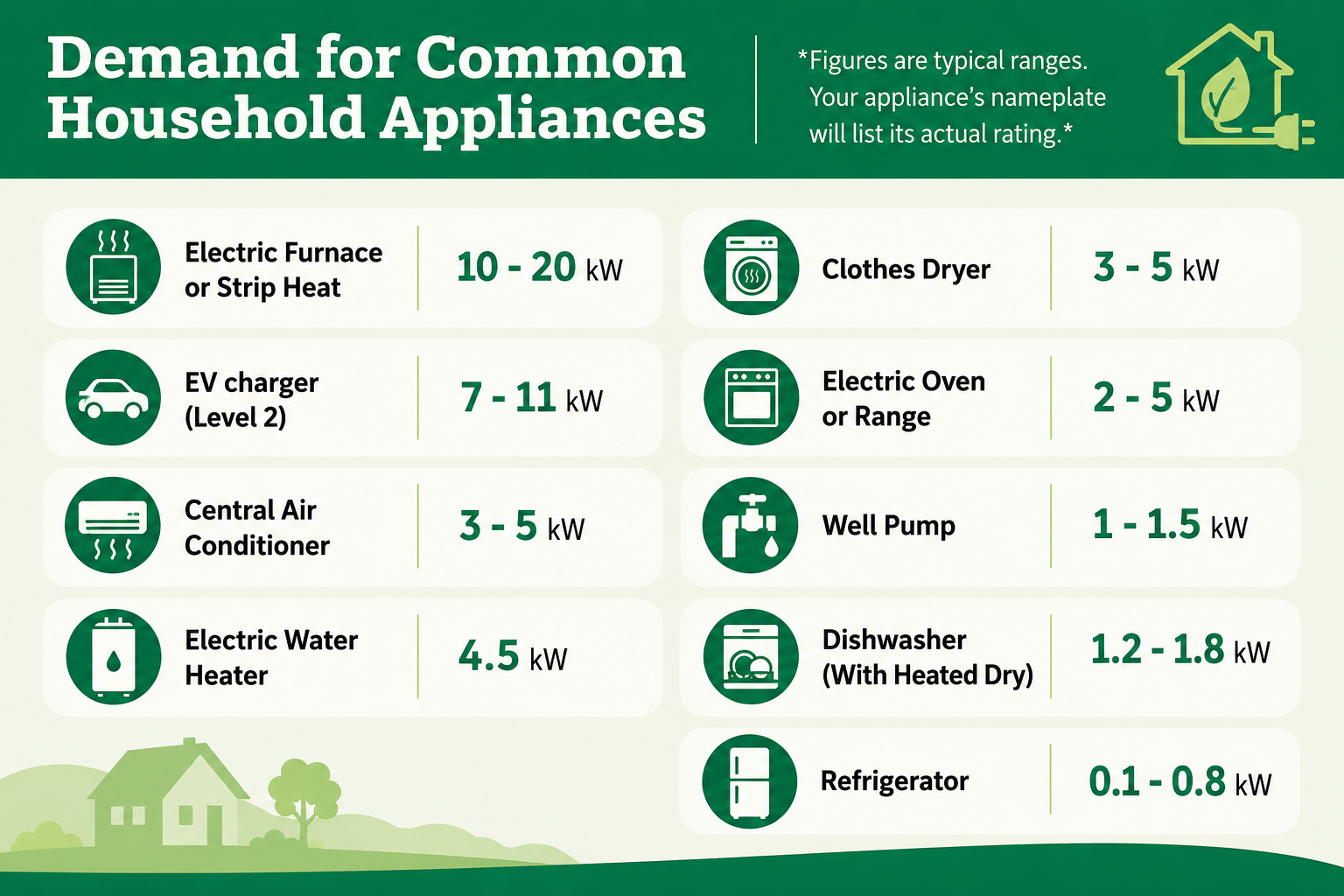
Most of the electricity in your home is pulled by a small handful of appliances. Heating and cooling is almost always the biggest single draw. Electric strip heat can pull 5-20 kW on its own, which is why winter mornings drive our winter peak. In summer, central air conditioning is the main contributor.
After that: the electric water heater, the clothes dryer, the oven and range, and the EV charger. Those five, plus your HVAC, are where your demand is often greatest.
The things people worry about, like the TV, the laptop, the phone charger and the LED bulbs do add small amounts to your demand but are not the main driver.
The Part That Actually Costs You
Here is a normal weekday at 5 p.m. in August. The air conditioner is running, someone starts a load of laundry, the oven is preheating for dinner, the dishwasher gets going, and everybody showered after work so the water heater is recovering. Add it up and you are pulling somewhere north of 16 kW. This could be your peak for the entire month.
Now run the exact same day differently. Start the dishwasher before bed, run the dryer after 6 p.m., preheat the oven a little later. Same laundry, same dinner, same showers, same total kilowatt-hours consumed, but your peak might land closer to 5 kW. Nothing was given up. The work just got spread out.
Four Habits That Flatten Your Peak
Stagger, don’t stack. Running the dishwasher, dryer and oven are all fine. Just not all at once, and not between 2- 6 p.m. on a summer weekday or from 6-10 a.m. on a winter weekday.
Move the flexible stuff off-peak. Laundry and dishes don’t care what time it is. Do them at night or on the weekend.
Put your water heater on a timer. It is one of the largest loads in the house and it runs whether you need it that minute or not. Try our water heater load management program to help!
Pre-cool, then coast. Cool the house before 2 p.m. and let the thermostat drift up 1-2 degrees during the peak. Your HVAC runs less when it costs the most.
Know Your Own Numbers
You don’t have to guess. Log in to SmartHub to see your actual usage and demand, broken out by day and hour. It’s the fastest way to spot which evening habit is setting your monthly peak.
And if you want your rate to reward you for shifting: members on our time-of-day rate saved roughly $10 a month last year. Learn more at pemc.coop/ special-rates or call 800.222.3107.